Conflations
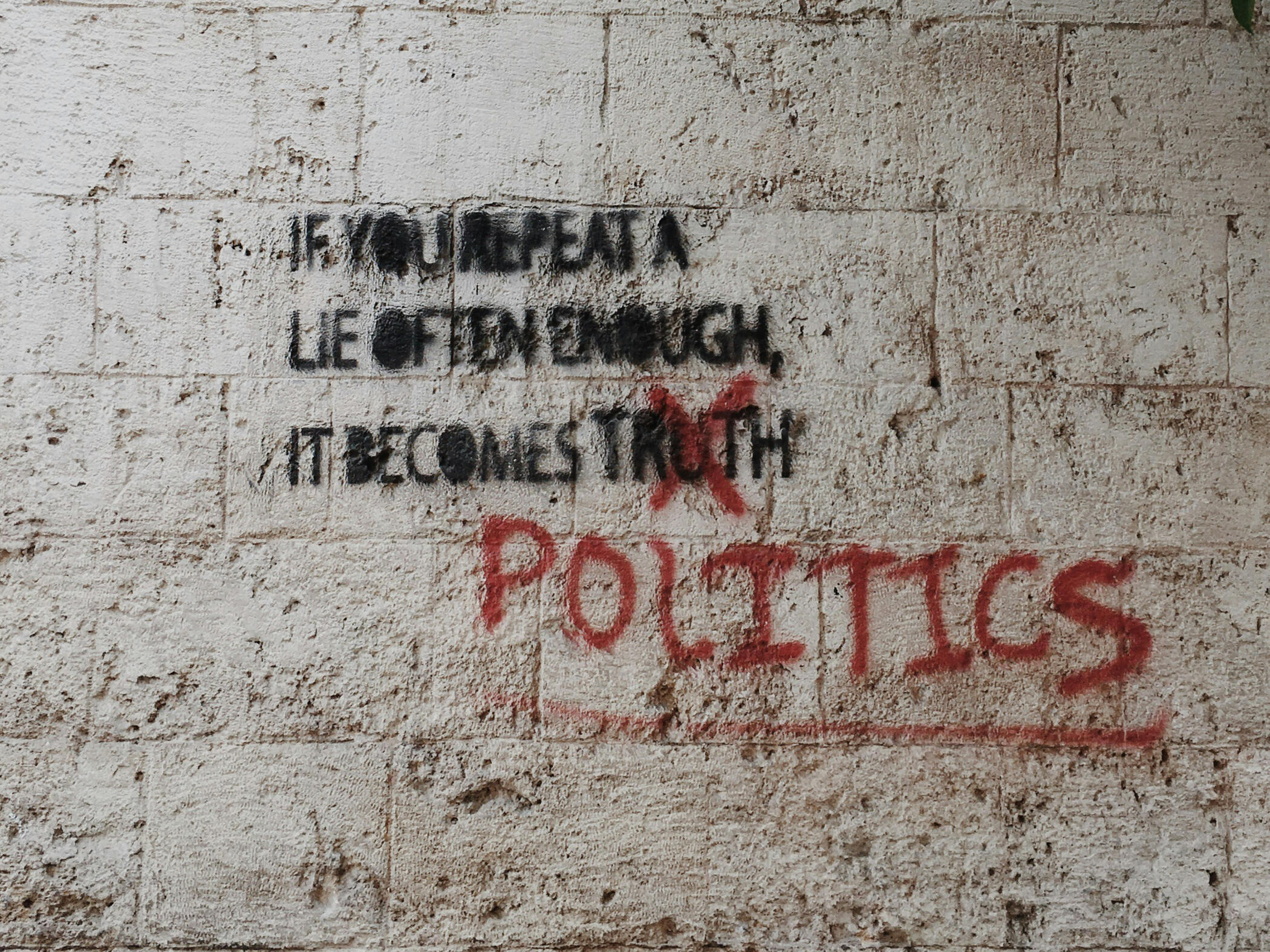
In recent years, Australian public discourse has been shaped by a series of false conflations — pairings of distinct ideas presented as if they were one and the same.They sound reasonable. They are repeated by serious people. They create the appearance of coherent sense-making.But each one quietly collapses a distinction that democracy depends on. And when the distinction disappears, so does the space to disagree.
The Pattern
A legitimate public concern (ideology, policy outcomes, empirical patterns, or foreign-policy critique) is redefined as equivalent to hatred of a group.Once the redefinition is institutionalised—through definitions, laws, university policies, media framing, or professional norms—dissent becomes costly.Speech that would otherwise be ordinary political communication is chilled, even when it does not incite violence or target individuals on the basis of identity.The stated goal is protection; the practical result is reduced accountability for the original issue.
In Australia these patterns have measurable effects on free political communication, institutional incentives, and the capacity to address real threats to social cohesion and public interest and safety. The examples below illustrate how the mechanism works.
Public Service = Private Interest (The Revolving Door)
Silences:
Dissent on who benefitsProtects:
The revolving class
The claim:
A former minister or senior public servant who moves into a private firm is simply continuing their service — bringing expertise to industry, and industry insight back to government. The door is a circulation, not a conflict.Why it sounds coherent:
It is legal. It is transparent (in the narrow sense that the job is disclosed). It is defended as a talent pipeline. And the individuals involved are, genuinely, competent. The fusion flatters meritocracy.What it actually fuses:
Public service — the discharge of a duty to the public, exercised under a legal framework of accountability, transparency, and the public interest.
Private interest — the pursuit of return, exercised under a framework of commercial confidentiality, shareholder value, and competitive advantage.One is answerable to the electorate. The other is answerable to the balance sheet. Fusing them converts a duty into a career move — and the public interest becomes one input among many, rather than the governing constraint.The democratic value undermined:
Accountability — the ability of the public to trace a decision back to a reason, and a reason back to a person, and a person back to an interest.When the door revolves, the trace breaks. A policy is set. A contract is awarded. A firm profits. A former minister joins that firm. And the public is left asking a question the system cannot answer: was this decided on the merits, or was the merits decided in advance?The door is legal. That is precisely the problem. Legality sets the floor of acceptable conduct — it does not set the ceiling. The revolving door is the gap between the two. It is legal yet corrupt in the precise sense that it satisfies every rule while defeating the purpose the rules exist to serve.The tell:
If public service and private interest were truly the same, then the timing of a departure would not matter — yet it does. The value of a former minister to a private firm is measured in proximity: to the decision, to the network, to the knowledge of what was coming. If the door were a circulation, proximity would be incidental. It is not. It is the product.The mechanism, in three moves:
A public role confers knowledge, relationships, and influence.
A private role monetises them — often in the same sector the public role governed.The public pays for the sector through contracts, subsidies, or procurement — while the direction of the sector is shaped by people who have stood on both sides.
Anti-semitism = Anti-zionism
Silences:
Dissent on foreign policyProtects:
Institutional consensus
The claim:
To criticise Zionism is to harbour hostility toward Jews. To be anti-Zionist is, functionally, to be anti-semitic.Why it sounds coherent:
Both concern Jewish people. Both involve the same historical trauma. Both are defended by serious institutions. The fusion feels like tidiness.What it actually fuses:
Anti-semitism — hatred of Jews as a people, a religious/ethnic phenomenon with deep roots in European history.
Anti-zionism — a political position on the ideology of a Jewish nation-state, its borders, its conduct, its relationship to diaspora Jewry.One is about identity. The other is about a project. They overlap — but they are not the same object.Democratic value undermined:
The right to hold a political opinion without it being reclassified as a prejudice.
When the two are fused, criticising a state becomes criticising a people. Disagreement is no longer debate — it is suspect. And once it is suspect, it invites institutional correction: speech codes, hiring filters, funding conditions, campus norms.The tell:
If anti-Zionism were anti-semitism, then the many Jews who are themselves anti-Zionist would be anti-semitic. They are not. The fusion cannot hold that fact without strain — and so the fact gets quietly dropped.
Defence = The Budget Priority

Silences:
Dissent on spendingProtects:
Institutional momentum
The claim:
National security is the precondition of everything else, therefore defence spending is not a choice among priorities but the floor beneath them.Why it sounds coherent:
Security is prior. You cannot fund hospitals if you are invaded. The logic is seductive.What it actually fuses:
Defence — a genuine public good, the provision of which is a core state function. A specific budget allocation — a number, set by politics, interest, and institutional momentum.The fusion converts a contingent figure into a necessity. Once defence is necessity rather than choice, its share of the budget becomes non-negotiable — and every other priority (health, education, welfare, climate) is redefined as residual.Democratic value undermined:
The budget as a site of genuine democratic choice.Budgets are where a society says what it values. When one line item is elevated to a floor, the deliberation collapses.The question is no longer "what kind of society do we want?" but "how much is left over after defence?"The tell:
If defence were simply the priority, the debate would be about how much — and it is. But the fusion smuggles in a second claim: that the direction of the number can only go up. Scarcity is invoked for every other portfolio, but never for this one.
The Real Impact on Society
1. Free speech is curtailed — not by law, but by classification.
You can still say the thing. But it is now read as something else. Anti-Zionist speech is heard as anti-semitic speech. Secular argument is heard as anti-religious argument. Budget dissent is heard as soft-on-defence. And criticism of a contractor is heard as criticism of national security itself. The words survive; the meaning is reassigned.2. Social cohesion is undermined — because disagreement is re-cast as division.
When two distinct positions are fused, the middle ground disappears. You are either with the fusion or against it. Coalition becomes identity. And identity, once mobilised, is harder to negotiate with than interest. The revolving door compounds this: when the same faces appear on both sides of every argument, the public stops believing the argument is real.3. The public interest is displaced by institutional interest.
Fusions are useful to institutions. They simplify messaging, consolidate authority, and immunise policy from challenge. The cost is borne by the public — in narrowed debate, in misallocated budgets, in a public sphere that feels increasingly managed. The revolving door converts this from a tendency into a structure: the people who make the rules are the people who will later be governed by them, and then employed by the firms that profit from them.4. Trust erodes — because the sense-making stops working.
People can feel the distortion even when they cannot name it. The discourse sounds rational but produces outcomes that do not match the stated reasons. The gap between how things are argued and how things are is where cynicism grows. The revolving door is the clearest case: every step is legal, every disclosure is filed, every appointment is defensible — and yet the outcome looks pre-arranged. The public is not wrong to feel this. It is reading the structure correctly.5. Data sovereignty is quietly surrendered.
When a former politician joins a foreign data or defence firm, the question of who holds Australian data stops being a technical question and becomes a relational one. The answer is shaped by people who once set the policy and now sell the service. The public is told the choice was made on the merits. The public is not told that the merits were defined by the people who would later be paid by them.6. The budget becomes a consequence rather than a choice.
When defence is a floor and the door is revolving, spending is no longer deliberated — it is inherited. Each contract creates a constituency. Each constituency creates an advocate. Each advocate returns to government. And the cycle continues, with the public funding the loop from both ends: as taxpayers and as consumers.
Name The Conflation
You've felt it. Now name it.You've been in the conversation. You've made the reasonable point. And you've watched it get reclassified — heard as something you didn't say, answered with a label instead of an argument. You walked away knowing something was off, but unable to point to exactly where the ground moved.That feeling is not confusion. It's pattern recognition. You are reading the structure correctly.False conflations work precisely because they are hard to name in the moment. They arrive dressed as common sense. They survive on repetition. And they are defended by people who benefit from the fusion — which is why they rarely get pulled apart in public.So let's pull them apart together.Submit a false conflation you believe is undermining democratic integrity.Two things fused that shouldn't be. A distinction that has quietly disappeared. A phrase that sounds reasonable but does a job — and the job isn't truth.It doesn't need to be polished. It doesn't need a citation. It just needs to be yours — the one you've noticed, the one that's been nagging at you, the one you've tried to raise and had waved away.A false conflation is not a lie. It is a shortcut — and shortcuts are how a democracy loses its way while still believing it is on the road.You've felt it. You've made the reasonable point and watched it get reclassified — heard as something you didn't say, answered with a label instead of an argument. You walked away knowing something was off, but unable to say exactly where the ground moved.That feeling isn't confusion. It's pattern recognition.Conflations survive because they're hard to name in the moment. They arrive dressed as common sense, and they hold only while they go unnamed. The moment enough people point at the same fusion and say "these are not the same thing" — it starts to loosen.
© Conflations 2026. All rights reserved.